Fire and flood restoration in Cardiff-by-the-Sea: why both happen together
Fire and water damage usually arrive as a pair in Cardiff-by-the-Sea. Here is why they happen together, what it costs to fix both, and how the cleanup actually works.
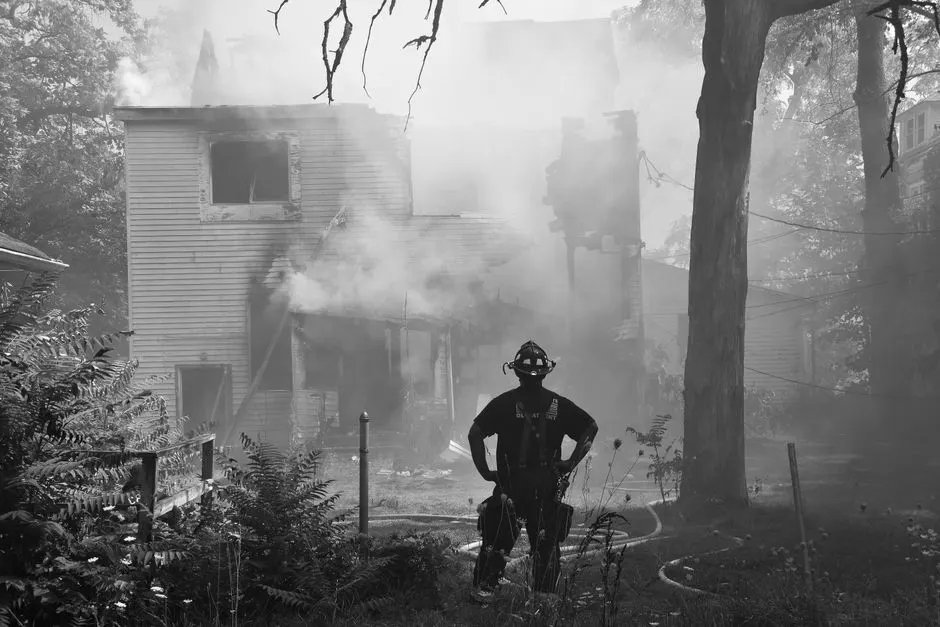
Fire and flood damage happen together because the water used to put out a fire - from fire hoses, sprinklers, and burst supply lines - soaks the same structure the flames just damaged. In Cardiff-by-the-Sea, California, that one-two punch is the rule, not the exception: nearly every house fire we respond to here leaves us drying a home as well as cleaning it. This post explains exactly how the two damages interact, what a proper fire and flood cleanup involves, what it costs in 2026, and the mistakes that turn a fixable loss into a six-month rebuild.
Why fire and flood damage happen together in Cardiff-by-the-Sea
Fire and flood damage happen together in Cardiff-by-the-Sea because suppression water, not the flames, is often the larger volume of damage. A standard 1¾-inch fire hose flows 150 to 250 gallons per minute. Ten minutes of suppression inside a 1,600-square-foot Cardiff cottage puts 1,500 to 2,500 gallons into the framing, insulation, and subfloor - roughly the same as leaving a bathtub running for six hours.
The fire itself makes that water far more destructive. Heat opens seams, warps door frames, and cracks the stucco and drywall that would normally shed a spill. Charred wood wicks moisture two to three times faster than sound lumber. So the same gallon that would evaporate off a kitchen floor in a healthy house soaks straight into structural cavities here.
Cardiff-by-the-Sea adds its own local twist. The marine layer keeps relative humidity high from May through September, and many of the older homes between the Fire Damage Restoration in Cardiff-by-the-Sea Village blocks were built before modern vapor barriers were standard. Wet framing in that environment does not dry on its own - it starts growing mold in 24 to 48 hours.
The three ways water follows a fire
Water reaches a fire-damaged home through three distinct paths, and each one needs a different fix.
1. Suppression water
Hose streams and sprinkler discharge are the obvious source. What surprises most homeowners is where it ends up: ceiling cavities, wall bays, and the crawlspace. Water travels along the path of least resistance, which in a wood-frame house is usually down and sideways through the same chases the wiring runs through.
2. Burst and melted supply lines
Fire heats copper and PEX supply lines until they fail. A melted line behind a wall can run at full household pressure for the entire suppression window. We routinely find 40 to 60 gallons of standing water in a laundry room or garage that never saw a flame.
3. Firefighting runoff and roof penetration
Ventilation cuts in the roof let hundreds of gallons drain straight into the attic and top-floor rooms. In Cardiff Bluffs, where homes sit on sloped lots, that runoff also pools against foundations and finds its way into garages and lower levels.
What fire and flood restoration in Cardiff-by-the-Sea, California actually involves
Fire and flood restoration in Cardiff-by-the-Sea, California is the combined process of extracting suppression water, drying the structure, removing soot and smoke residue, and rebuilding what the fire destroyed - in that order, because drying before deodorizing prevents smoke from baking into wet materials. Skipping the sequence is the single most common reason a home smells like a campfire six months later.
Here is the order we work in on a typical loss:
- Make-safe and board-up. Secure the roof, windows, and doors, and shut off utilities. This happens the same day.
- Water extraction. Truck-mounted extraction pulls standing water, then we meter the framing with pin and infrared moisture meters to map what is wet behind the walls.
- Structural drying. Commercial dehumidifiers and air movers run 3 to 5 days, targeting 12 to 16 percent moisture content in framing.
- Soot and smoke removal. Dry soot comes off first with HEPA vacuums; wet or oily soot needs chemical sponges and specialized detergents. This is where Smoke Damage Restoration in CARDIFF BY THE SEA, California work overlaps with water damage - smoke residue on wet drywall smears instead of lifting.
- Odor treatment. Thermal fogging and hydroxyl generators neutralize smoke molecules trapped in the same cavities the water soaked.
- Rebuild. Drywall, flooring, cabinetry, paint, and trim go back once moisture readings confirm the structure is dry.
We handle all six steps with one crew, which matters because the handoff between a water mitigation company and a fire rebuild contractor is where most timelines slip. If you have already had a fire and the water is still standing, our fire and water damage restoration CARDIFF BY THE SEA California team can be on-site the same day.
How much does fire and flood restoration cost in Cardiff-by-the-Sea?
Typical 2026 pricing in this area runs $4,500 to $12,000 for a contained kitchen or room fire with limited water spread, and $18,000 to $60,000 or more for a whole-house loss that requires structural rebuild. The water side alone - extraction and drying - usually accounts for $2,500 to $8,000 of that total.
What moves the number most is not the fire damage you can see. It is how far the water traveled and how long it sat. A fire contained to one bedroom with 200 gallons of suppression water is a two-week job. The same fire with water that sat in the crawlspace for four days before anyone called is a mold remediation plus a rebuild.
Most Cardiff-by-the-Sea homeowners pay a deductible rather than the full cost. Standard homeowner policies cover fire suppression water damage as part of the fire claim. The gap is usually flood insurance: if the water came from outside the house - storm runoff, a rising creek, a wave over the seawall - that is a separate NFIP or private flood policy, and it is worth checking your declarations page before you assume you are covered.
How long does fire and flood restoration take in Cardiff-by-the-Sea, California?
Most fire and flood restoration projects in Cardiff-by-the-Sea, California take 2 to 6 weeks from first visit to move-in ready, split roughly into 3 to 5 days of drying, 3 to 7 days of soot and smoke cleanup, and 1 to 4 weeks of rebuild. A single-room loss with quick water extraction can finish in 10 to 14 days.
Two things stretch that timeline here. First, coastal humidity: framing in Cardiff-by-the-Sea dries slower than inland San Diego County, so we run dehumidifiers a day or two longer than a crew in El Cajon would. Second, permit timelines. Structural repairs in the 92007 ZIP code go through San Diego County permitting, and a rebuild that touches framing or electrical adds 2 to 4 weeks to the schedule.
If the water is still present, the clock matters more than the calendar. Mold colonization starts within 24 to 48 hours, and every day of delay adds roughly 10 to 15 percent to the drying scope. That is why we run 24/7 fire damage restoration CARDIFF BY THE SEA California - the call at 2 a.m. is cheaper than the call next Tuesday.
Common mistakes we see after a house fire
The mistakes that cost Cardiff-by-the-Sea homeowners the most money are almost always about sequencing, not effort.
- Drying the house before removing soot. Air movers blow soot particles into every crevice and into the HVAC system. Once that happens, the ductwork has to be replaced.
- Assuming the water is gone because the floor is dry. Water hides in wall cavities and crawlspaces. A $150 moisture meter reading saves a $15,000 mold job.
- Throwing away smoke-damaged furniture too early. Much of it is restorable. Fire-Damaged Furniture Restoration in CARDIFF BY THE SEA, California can often save pieces that look ruined, especially solid wood.
- Running the HVAC system. If the air handler pulled smoke, every supply run is now contaminated. Shut it off until the ducts are cleaned.
- Waiting on the insurance adjuster before extracting water. You have a duty to mitigate. Document everything with photos, then get the water out. The policy requires it.
When to call a professional
Call a professional when the fire damage extends beyond a single room, when suppression water is still standing, or when smoke odor persists after 48 hours of ventilation. Those three conditions mean the damage has moved into wall cavities, and household fans and shop vacs cannot reach it.
Small, contained fires - a stovetop flare, a candle that scorched a counter - are often a cleaning job, not a restoration job. The line is water. If a fire extinguisher or a hose was used, and the water went anywhere other than a hard floor you can mop, get it looked at. Our team at Fire Damage Restoration Cardiff By The Sea handles the assessment and the drying in one visit, and we tell you plainly if you do not need us.
We also work directly with insurance carriers on the documentation side, which is where most homeowners lose money - not on the repair, but on the scope that never got written down.
Frequently Asked Questions
Why do fire and flood damage happen together in Cardiff-by-the-Sea, California?
Because putting out a fire requires 150 to 250 gallons of water per minute, and that water soaks into the same framing the fire weakened. Heat opens seams and cracks drywall, so suppression water penetrates two to three times deeper than it would in an undamaged home.
How much does fire and flood restoration cost in Cardiff-by-the-Sea?
Expect $4,500 to $12,000 for a contained single-room loss and $18,000 to $60,000 or more for a whole-house rebuild in 2026. The water portion alone typically runs $2,500 to $8,000. Most homeowners pay only their deductible.
Who does fire and water damage restoration near me in Cardiff-by-the-Sea?
Fire Damage Restoration Cardiff By The Sea handles both the water extraction and the fire rebuild with one crew, which avoids the handoff delays that stretch most projects. We serve the 92007 ZIP code and the surrounding Cardiff neighborhoods.
How long does fire and flood restoration take in Cardiff-by-the-Sea, California?
Most projects take 2 to 6 weeks: 3 to 5 days of drying, 3 to 7 days of soot and smoke cleanup, and 1 to 4 weeks of rebuild. Coastal humidity and San Diego County permitting add time to larger jobs.
Does insurance cover fire and flood restoration in Cardiff-by-the-Sea?
Homeowner policies cover fire suppression water damage as part of the fire claim. Water that entered from outside - storm runoff or tidal flooding - requires a separate flood policy. Check your declarations page before assuming coverage.
Get help with Fire Damage Restoration in Cardiff-by-the-Sea
If your home has both fire and water damage, the order you fix them in decides whether you are back in the house in two weeks or two months. We handle the extraction, drying, soot removal, and rebuild as one job, and we start the same day you call.
Call Fire Damage Restoration Cardiff By The Sea at (833) 929-6186 for same-day fire and flood cleanup in Cardiff-by-the-Sea.